Concentration-camp prisoner selection and deportation to Auschwitz
The ReaderConcentration-camp prisoner selection and deportation to Auschwitz was a recurring system for deciding which women would be sent back to Auschwitz and which would remain at a factory camp. In Hanna Schmitz’s trial, the selections became a principal charge: her evidence described guards making the decisions together, while her explanation that the incoming prisoners needed room revealed how administrative routine could coexist with acknowledged lethal consequences.
The Monthly System
Each month, around sixty women were sent from Auschwitz to the camp, and approximately the same number were sent back, less those who had died in the meantime. The evidence makes the purpose of the return journey explicit: prisoners sent back to Auschwitz would be killed. The selection therefore was not simply a transfer or a neutral assessment of work capacity; it allocated who would be sent to death.
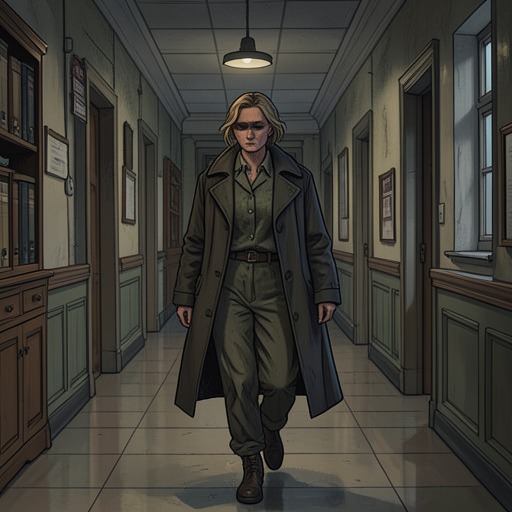
The stated criterion was the ability to continue useful work in the factory. The factory produced munitions, but the work itself was not difficult, and the women were seldom able to perform it. Instead, they were occupied with raw construction to repair extensive damage caused by an explosion earlier that year. The account thus places selection within a labor system whose practical demands had been disrupted, while making clear that prisoners judged no longer useful were sent back to Auschwitz.
Decisions Made Collectively
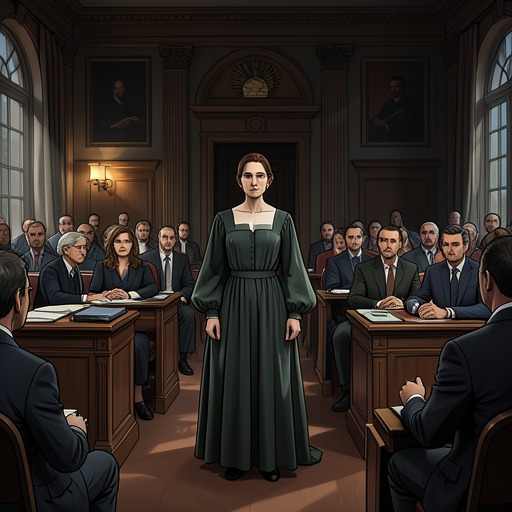
At trial, Hanna admitted participating in the selections when the other defendants denied involvement. She said the guards had divided the camp into six equal areas of responsibility and agreed to tally ten prisoners from each area, making sixty in all. The figures could vary: one guard might have few sick prisoners in her area while another had many. When that happened, all the guards on duty decided together who would be sent back.
Her account establishes both a procedure and a shared decision-making structure. The selections were not represented as the isolated choice of one guard; they were undertaken by the guards on duty, who adjusted the numbers and reached the decision collectively. Hanna’s readiness to acknowledge her participation contrasts with the other defendants’ denials, but her description does not make the choices impersonal: the guards together decided which prisoners would be returned.
Hanna’s Testimony and the Question of Responsibility
When the judge asked whether the guards had acted together, Hanna agreed. Asked whether she knew that they were sending prisoners to their deaths, she again answered yes. She explained that new prisoners arrived and that the old ones had to make room for them. The exchange places knowledge and routine side by side: Hanna understood the consequence of a return to Auschwitz, yet framed the selection through the continuing arrival of new prisoners and the need to make space.
The judge pressed the implication of her explanation, asking whether making room meant identifying particular prisoners to be sent back and killed. Hanna did not understand what he was getting at. Her response exposes a divide between the practical terms in which she described the process and the moral and legal significance the court was trying to establish. She could acknowledge participation and knowledge without grasping the judge’s attempt to make the act of choosing individual victims explicit.
Trial, Memory, and Consequence
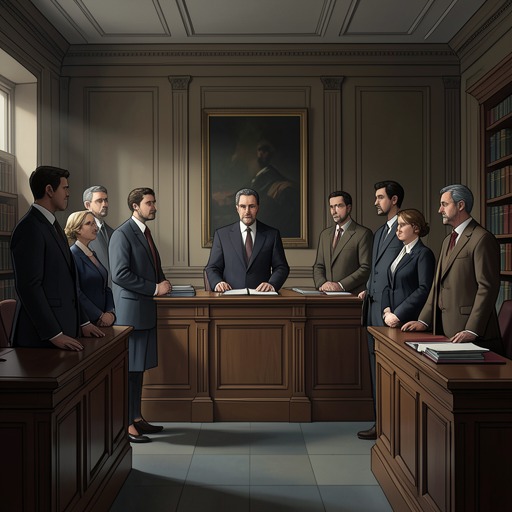
The selections were one of the trial’s two main charges. The other concerned the guards’ conduct during the night of a bombing, so the proceedings examined both the repeated camp system and a separate episode at the end of the prisoners’ westward march. For the selection charge, the monthly numbers and the testimony about collective decisions supplied concrete grounds for examining what the guards had done and what they knew.
Years later, Michael Berg found a notebook recording what he had read aloud for Hanna during her imprisonment. Its entries showed that he had first sent her recordings in the eighth year of her sentence and continued through the eighteenth; in that final year, her plea for clemency was granted. This later detail situates the trial’s account of the selections within the long aftermath of conviction and imprisonment, without undoing what Hanna admitted: she participated in decisions that knowingly sent prisoners back to Auschwitz to die.
The episode also belongs to the novel’s wider examination of how a society confronts crimes committed through ordinary structures and repeated procedures. The trial asks not only whether the guards followed an agreed method, but what their shared decisions meant when the outcome was known. Hanna’s explanation preserves the language of numbers, assigned areas, sickness, arrivals, and space; the judge’s questions insist that the procedure be understood as a series of choices about prisoners’ lives.